


Alzheimer's and CBD
Alzheimer's and risk factors
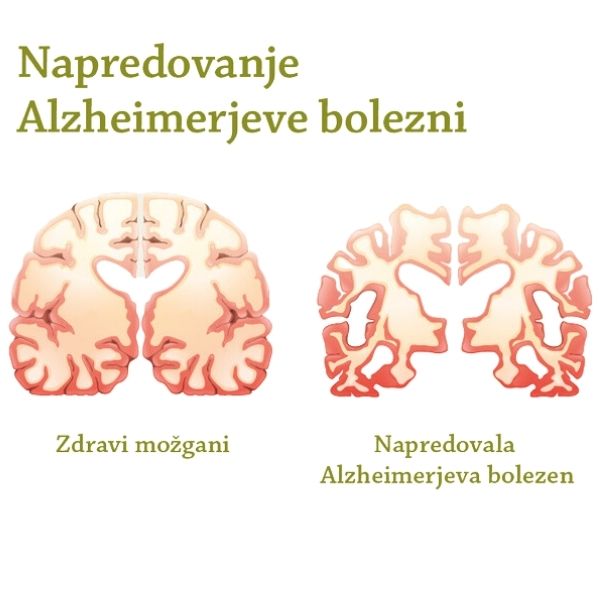
Medicine is still searching for the causes and treatments for Alzheimer's disease, but in general, researchers believe that Alzheimer's is partly the result of genetics, environmental influences, and an individual's lifestyle.
Risk factors for the condition include lack of physical activity, obesity, high blood pressure, diabetes, depression, and smoking. In recent years, there has been a growing body of research suggesting that sleep deprivation, chronic dysbiosis, and leaky gut may also contribute to the condition (Chunmei Jiang et al.: The Gut Microbiota and Alzheimer's Disease).
In addition to the methods of alleviating problems offered by official medicine, sufferers can also help themselves with natural measures (e.g. ginkgo, acetyl-L carnitine, omega-3 fats, tyrosine, vitamin E, curcumin, etc.). Among these, natural CBD extract from industrial hemp is also gaining increasing popularity. Numerous studies to date on animals, in the laboratory, on a small number of people, etc. confirm that cannabinoids could even be a very effective preventive and curative agent for Alzheimer's disease in the future. Such studies include the following.
A 2007 study (G. Esposito et al.: Cannabidiol in vivo blunts beta-amyloid induced neuroinflammation by suppressing IL-1beta and iNOS expression) confirms that CBD It can calm inflammation caused by beta amyloids in the brain and is associated with Alzheimer's disease.
In 2017, researchers confirmed in mice that long-term therapy with CBD prevents memory loss, including that associated with recognizing people, so CBD could also represent a preventive therapy (David Cheng et al.: Long-term cannabidiol treatment prevents the development of social recognition memory deficits in Alzheimer's disease transgenic mice).
How does CBD affect the brain?
CBD not only does it have a positive direct effect on Alzheimer's disease (it has neuroprotective and neuroregenerative effects, is anti-inflammatory, antioxidant, anti-ischemic, supports cholesterol homeostasis, etc.), but it also has a positive effect on managing many risk factors for the development of this disease. It is known that CBD It also exhibits antidiabetic and antihypertensive potential, relieves stress, anxiety, depression, improves sleep, helps with addiction recovery, etc.
Considering all the effects known so far CBD many researchers have no doubt that additional clinical trials with CBD, will also confirm the validity of its use in the management of Alzheimer's disease in the future.
Text: Adriana Dolinar, Ph.D.Vet.Med., the president Associations for the Awakening of the Whole Man and an external employee of the information center - Zadravje.net.
Source: https://www.zazdravje.net
Read more:


